Saturday, December 20, 2008

Ipod Nano 3rd Gen


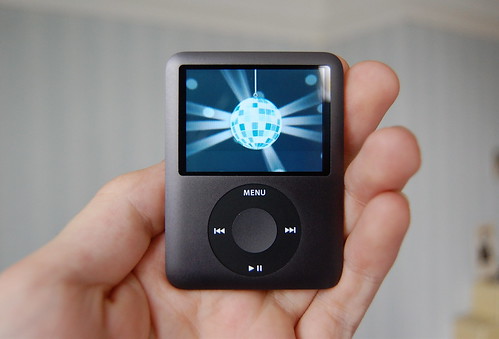
Apple updated the Nano again on September 5, 2007. The third-generation Nano features a 2-inch (51 mm) QVGA (320×240) screen and a shorter, wider, heavier design, with new colors. New features include browsing via Cover Flow, a new user interface, video playback, and support for new iPod Games. Users must repurchase games bought before a month prior to the debut of the new iPod as they are not supported. The Nano was announced in a 4 GB version at US$149 (UK£99.99) coming only in silver, and an 8 GB version at US$199 (UK£129.99) coming in silver, turquoise, mint green, black and Product Red. The battery lasts for approx. 24 hours on audio playback and approx. 5 hours on video playback. On January 22, 2008, Apple released a pink version of the 8 GB iPod Nano.


Combining elements from previous generations of the iPod Nano, the third-generation Nano has an aluminum front plate and a stainless steel back plate. The Nano also sports a new Minimalistic hold switch, similar to the iPod Shuffle's power switch, which has been moved to the bottom of the player. The 2-inch (51 mm) screen has the smallest dot pitch of any Apple product, having the same pixel count as the 2.5-inch (64 mm) display of the iPod Classic.

On October 6, 2007, Apple released a firmware update (1.0.2) via iTunes that is said to improve Cover Flow and yield faster menu navigation. The update was also released for the iPod Classic. On November 28, 2007, Apple released another firmware update (1.0.3) via iTunes, which included unspecified bugfixes. January 15, 2008 saw the release of version 1.1, which added support for iTunes movie rentals, music song lyrics support and included more unspecified bugfixes. In May 2008, Apple released update version 1.1.2. In July 2008, Apple released update 1.1.3.

Ipod Classic 6th Gen


During a special iPod-centric event on September 5, 2007, Steve Jobs introduced the sixth generation iPod and the retronym suffix "Classic". Featuring slightly thinner bodies, the sixth generation Classic also sported dramatically improved battery life, claiming up to 40 hours of music playback and 7 hours of video playback. The front plate of the iPod is now made of anodized aluminium instead of polycarbonate plastic, and "Signature iPod White" has been replaced by silver. This means that it is the first time that white is not a color option for any iPod in the iPod family. The sixth generation Classic also introduced a completely overhauled user interface, incorporating more graphics and Cover Flow. The sixth generation Classic was offered in an 80 GB (20,000 songs) model for MSRP US$249/GBP£159 and a 160 GB (40,000 songs) model for MSRP US$349/GBP£229. The U2 special edition has been dropped.


During the Let's Rock Apple Event on September 9, 2008, the 80 GB and the thicker 160 GB model were discontinued in favor of a thin 120GB version retailing for US$249/GBP£179.

Acoustics issues

According to certain tests performed both by hearing and through computer analysis of the sound, the 6th Generation iPods lack sound quality in the mid range, and produces less spatial information (i.e. stereo sound plays 'inside your head' instead of 'outside') due to higher impulse in the treble compared with 5G.Apple has not yet commented on this problem.

A firmware update, 1.1.1, released by Apple for the iPod Classic is said to, among other things, improve the sound quality.  However, no details on these improvements were given on the Apple website.

Another later update, 1.1.2, is shown to correct bug fixes, but is nonetheless another minor update.


Software issues

The first batch of sixth generation iPod Classics have been reported to crash trying to load album art and connecting to iTunes after syncing for the first time. Some people also have reported that browsing through Cover Flow, playlists and navigation is sluggish.Windows Vista users also have to download Windows Updates to fix the syncing problems. iPods of the 6th generation (as well as the iPod Nano and the iPod Touch) introduced an additional checksum in their song database, making it initially impossible (without reverse engineering) to use the iPod with 3rd party syncing programs. This limitation was soon worked around by Gtkpod, MediaMonkey and Sharepod teams.

Since its release, the iPod Classic has also suffered from an On-The-Go playlist bug that occurs when users attempt to add songs to the end of the playlist once the playlist has started playing, rendering the "On-The-Go" aspect of this function effectively unusable

Ipod Classic 5th Gen


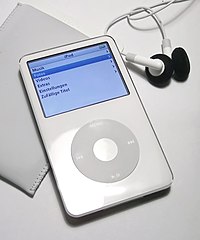
The fifth generation iPod, called the iPod with Video, was introduced on October 12, 2005, shortly after the introduction of the iPod Nano. The fifth generation iPod featured a 2.5" 320x240 QVGA screen and a smaller Click Wheel. The fifth generation iPod is the first iPod Classic to be available in an alternative color scheme in a non-special edition form, as a black option was added alongside "Signature iPod White", and marked the second full redesign of the iPod's aesthetic with its re-arranged proportions, its return to a fully flat front plate, and its more rounded rear casing. The 4-pin remote port was removed as well, causing backwards accessory compatibility issues. A 30 GB model was offered for US$299 and a 60 GB model was offered for US$399. The 5G iPod was also offered in the U2 special edition for US$349 with 30 GB.


The fifth generation iPod plays video in MP4 (up to 2.5 Mbit/s) and H.264 (up to 1.5 Mbit/s, baseline profile only) formats. Video such as TV shows, podcasts, music videos, and movies may be purchased from online stores such as the iTunes Store, or downloaded from Google Video and other sources, then imported to the iPod via iTunes software.

Videos or photo slideshows may be played from the fifth generation iPod on a television set, projector or monitor with the use of the Apple iPod AV cable or via a dock using an S-Video cable. It is also possible to do this using some camcorder cables with an RCA connection at one end and a three-banded eighth-inch (3.5 mm) A/V plug at the other, however the red and yellow plugs (normally the audio right and video signals respectively) must be swapped around in order to achieve the correct signal.

The fifth generation iPod was updated on September 12, 2006. This update included a brighter screen, a search feature, gapless playback, support for iPod games, and newly designed earphones. The refreshed iPod also had a longer video playback time. Support for iPod games for the 5G and gapless playback for all iPods were enabled through a firmware update. An iTunes installation CD was also no longer bundled, requiring users to download iTunes from Apple's website. During this update, the 60 GB model was replaced with an 80 GB model, and prices were cut by US$50 for both the 30 GB (US$249) and the 80 GB (US$349) models.

  © Blogger template Brooklyn by Ourblogtemplates.com 2008

Back to TOP